Summary
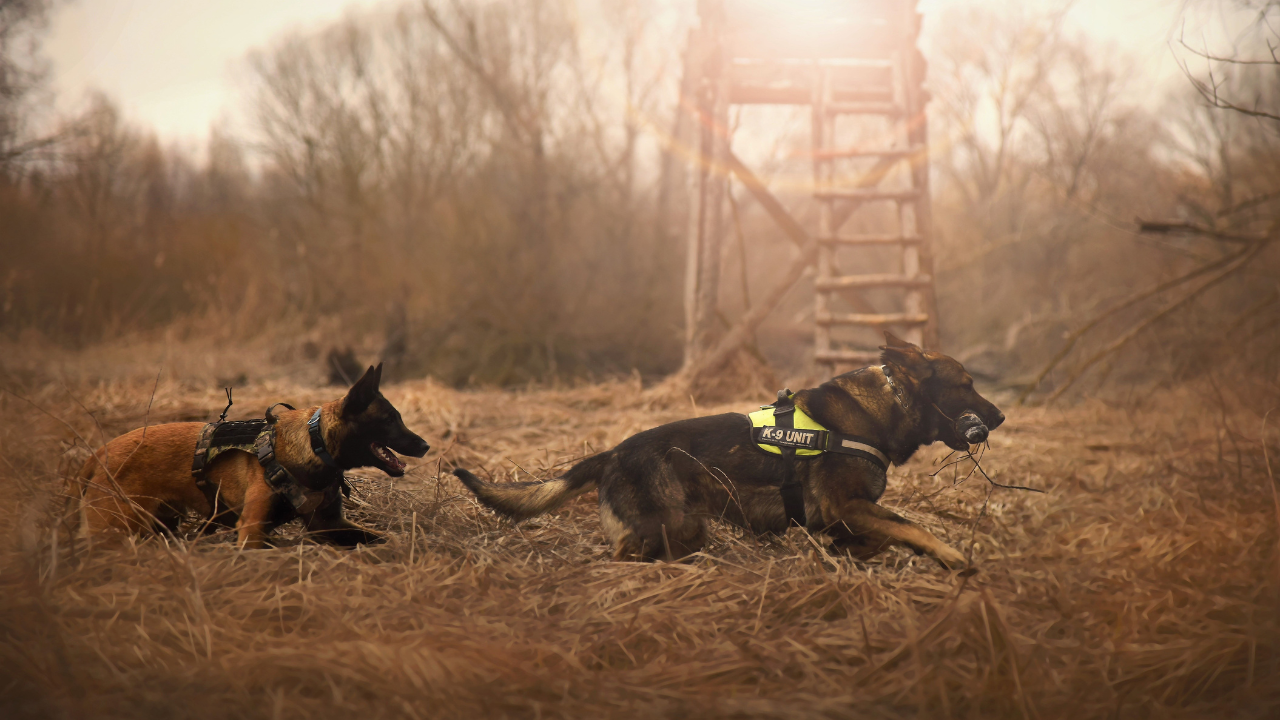
Despite advancements in modern surveillance technology, counter surveillance units still depend on dogs for what technology cannot detect. The units find hidden explosives, track down fleeing insurgents, and help soldiers on the ground clear structures alongside ground units. This blog covers their core roles (i.e. detection, tracking, patrol and direct-action support) and how specific dog breeds, such as the Belgian Malinois and German Shepherd are matched to specific jobs. It also walks through a scenario of Tyson K9 heroic, and looks at why the handler-dog bond remains central to their effectiveness on the battlefield.
When people picture modern warfare, they usually think of drones, night-vision optics, precision-guided munitions. Rarely does the image include a dog. Yet in counter-insurgency (COIN) operations, the messy, close-quarters fights against guerrillas, militants and irregular forces embedded among civilian populations, military working dogs remain one of the most reliable tools a unit can bring into the field. Technology can scan a wide area, but a dog’s nose can find the one threat hiding in it.
Why K9 Dogs Matter in Asymmetric Conflict
Asymmetric warfare offers no clear frontline, and insurgents exploit that by blending into markets, forests and villages. Their weapon of choice relies on their ability to improvise, so they often make use of buried devices, hidden caches and booby-trapped doorways. It is precisely this environment where dogs can excel.
A trained detection dog’s sense of smell is estimated to be tens of times more sensitive than a human's, letting it pick up buried explosives, weapon caches or narcotics that fund an insurgency long before a soldier would ever notice a disturbed patch of earth. That capability turns a dog into an early warning system that walks ahead of the patrol rather than behind it.
Core Roles K9 Units Fill
Asymmetric warfare offers no clear frontline, and insurgents exploit that by blending into markets, forests and villages. Their weapon of choice relies on their ability to improvise, so they often make use of buried devices, hidden caches and booby-trapped doorways. It is precisely this environment where dogs can excel.
A trained detection dog’s sense of smell is estimated to be tens of times more sensitive than a human's, letting it pick up buried explosives, weapon caches or narcotics that fund an insurgency long before a soldier would ever notice a disturbed patch of earth. That capability turns a dog into an early warning system that walks ahead of the patrol rather than behind it.
Explosive and mine detection: Locating IEDs, landmines and weapon caches before they can be triggered or Labrador Retrievers are frequently favored here for their scenting ability and calm temperament in high-pressure, civilian-heavy environments.
Tracking: Following the scent trail of insurgents who have fled an ambush site or an attack, helping units maintain contact with an enemy that would otherwise vanish into the terrain.
Search and rescue: Locating wounded personnel or civilians in collapsed structures, dense jungles or disaster zones that often follow combat in populated areas.
Patrol and perimeter security: Guarding forward operating bases and checkpoints, where a dog’s senses extend a unit’s awareness well beyond what sentries alone can manage.
Direct-action support and apprehension: In special operations contexts, dogs are sent into structures ahead of human operators to locate, and if necessary ,physically subdue a threat, reducing the risk to the team that follows.
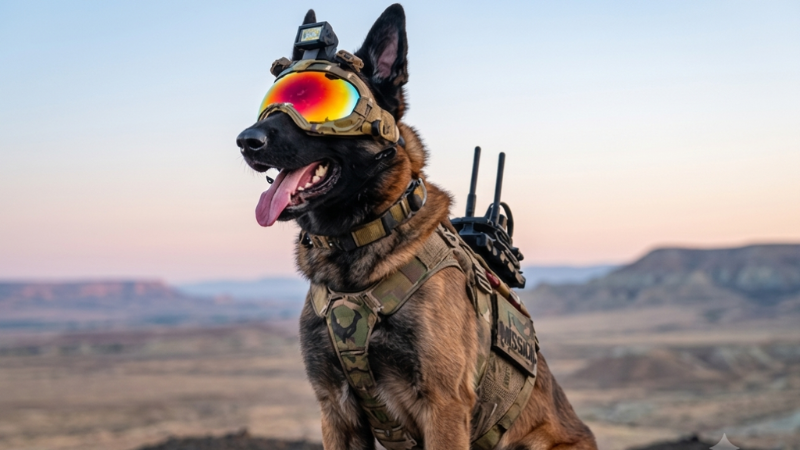
Not every counter-insurgency role calls for the same breed of dog. For example, Belgian Malinois are widely preferred for counter-insurgency and direct action work because o their agility, speed and lighter build-traits that make them well suited to fast-moving special forces missions. German shepherds tend to be used for guarding, patrol and assault-support roles that call for strength and versatility. Both these breeds are valued for bite force strong enough to immobilize an adversary and buy an operator critical seconds to gain control of a situation.
A Contemporary Example: Counter-Insurgency in Rugged Terrain
K9 integration continues to evolve alongside other battlefield technology. In counter insurgency zones with difficult terrain such as dense forests, mountainous districts and limited road access, ground forces increasingly pair dog teams with their mobility assets. Efforts to integrate K9 assets more tightly with air assets aim to improve the speed and flexibility with which dog teams can be inserted into remote or inaccessible areas, which is particularly relevant where road access is limited and air mobility often determines operational outcomes. Heliborne insertion drills let handler-and-dog teams reach areas that would otherwise take hours to patrol on foot, cutting the response time between intelligence and action.
In such environments, dog teams provide a distinct tactical advantage in locating hidden insurgents or improvised explosives in dense forest cover and difficult topography that complicate ground operations. The dog effectively becomes a mobile sensor platform that can go where even vehicles and dense surveillance technology cannot.
Dogs on High-Profile Missions
The value of K-9 units in irregular warfare isn’t theoretical. In February 2026, an Indian Army Dog named Tyson was involved in an encounter in the Chatroo area of Kishtwar, Jammu & Kashmir. According to reporting, Tyson was part of the operation to locate terrorists hiding in the forest. He detected the terrorists' hiding position, and was shot during the operation, but continued working and helped the troops identify the hideout.
These illustrate how deeply integrated dogs have become into the even the most sensitive special operations missions.
The Handler-Dog Bond
None of this works without the human half of the team. Handlers and their dogs typically go through extensive joint training, and the relationship that develops is central to operational effectiveness, instead of sentimentality. A handler has to read subtle behavioural cues from the dog in real time, a change in gait, a freeze, a shift in attention. In combat, that non verbal communication can be the difference between spotting a threat and walking into one.
This bond also means K9 units bear real risk. Working dogs have been wounded and killed in the same operations as their human counterparts, and several have been formally recognized for valor, a reflection of how seriously militaries now treat dogs as combatants rather than support animals.
Looking Ahead
As insurgencies increasingly rely on concealment, improvised weapons, and blending into civilian populations, the core advantages dogs offer: a biological sensor with judgement, agility, and speed-remains difficult to replicate with hardware alone. Expect continued investment in combining K9 teams with air, mobility, night operations and special forces integration, even as electronic detection technology improves. In counter insurgency and asymmetric warfare, the oldest tool in the military’s arsenal is still the most effective one.
Disclaimer : This post is intended for general informational purposes and draws on publicly available military and defense reporting.